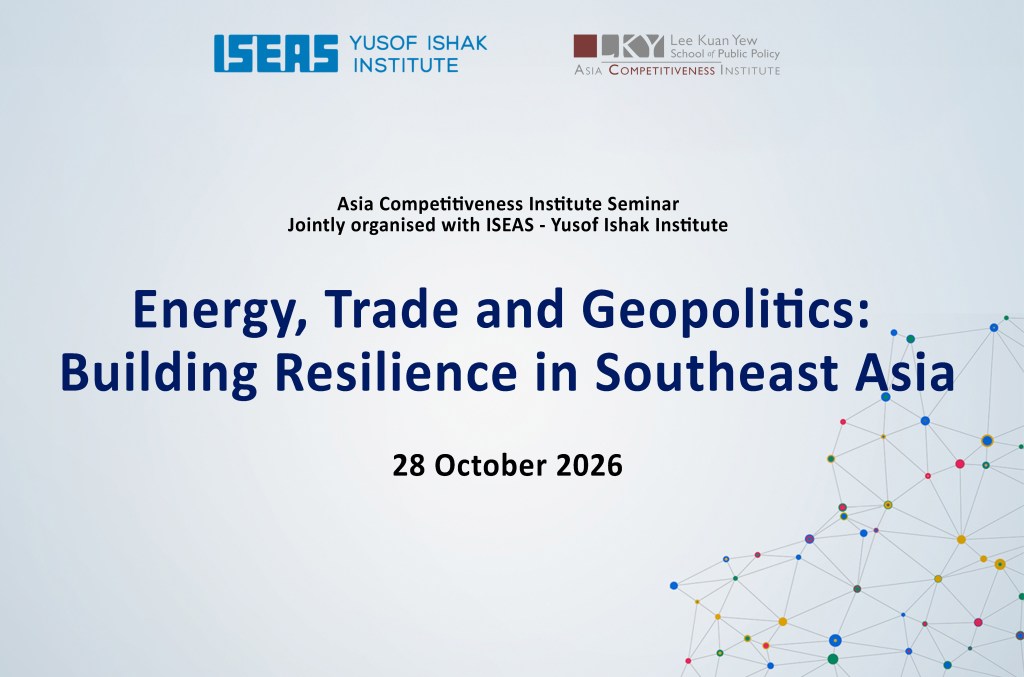
The disruption of energy flows through the Strait of Hormuz has exposed structural vulnerabilities in Southeast Asia’s energy systems, trade flows and wider economic security. The seminar discussed how geopolitics is reshaping energy security in the region, from maritime chokepoints and fuel affordability to trade and supply chain risks in solar and other clean-energy technologies. The central message was the need for more affordable options.
In response to the Hormuz shocks, Southeast Asian governments introduced short-term cushioning measures, such as subsidies and tax relief. These are not sustainable given limited fiscal space and the opportunity cost of the resources they consume. The question is how to unwind them while building long-term resilience through structural responses.
Renewables were described as a structural hedge, but their value depends on diversified supply chains. Southeast Asia has substantial solar PV module manufacturing capacity, yet it relies heavily on Chinese investment, technology and intermediate goods, and increasingly on Chinese modules themselves. This exposes the region to another layer of vulnerability. The key is a more regionalised supply chain that reduces dependence on a single supplier. Governments need to choose which stages or products to specialise in, building on their natural endowments and industrial bases, and to signal clear domestic commitment, such as local demand, to attract investors.
Key Highlights:
1. Complete energy independence is difficult, if not impossible. A realistic goal is resilience, with more options for securing affordable fuels, faster electrification and regional clean-tech supply chains.
2. The first few gigawatts of renewable capacity are always expensive, owing to limited economies of scale and uncertain risks. Multilateral development banks, concessional loans and blended finance can absorb and share these early risks.
3. Turning renewable potential into operating projects requires policy certainty across political cycles, a clean power supply chain from solar panels and wind turbines to intermediate inputs, and high-quality electricity supply.
4. Regional cooperation is critical to energy security. Initiatives such as the ASEAN Power Grid can connect cost-competitive suppliers with demand centres, adding a further layer of insurance. Realising this requires operational coordination and lessons from dialogue partners’ experience in cross-border power trade.
By HUANG, Yijia

