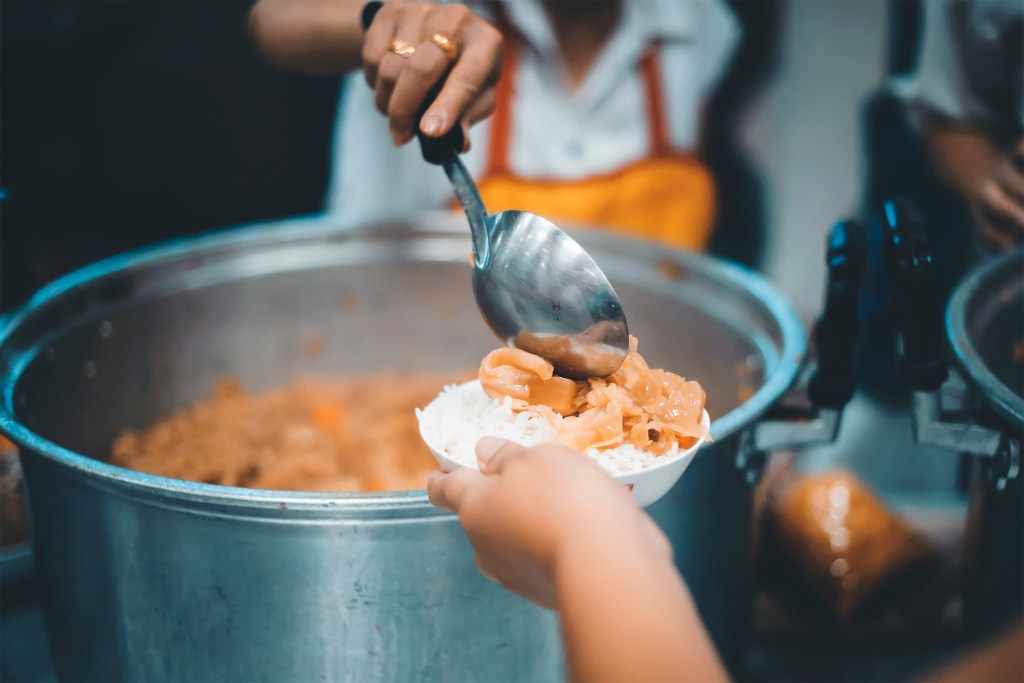
India’s midday meal scheme — the world’s largest school feeding programme — provides free lunches to more than 115 million children every school day. The scheme was designed to fight malnutrition and encourage school attendance. New research from the Asia Competitiveness Institute (ACI) shows that it also reshapes household education spending in ways that extend beyond the lunch tray. Using nationally representative household-survey data from 2005–06, the study examines the staggered rollout of the scheme across Indian states affected families’ education decisions. Its main finding is clear: free meals changed where families spent money on education, but not how much they spent overall.
Lower school fees
Free meals were associated with greater enrolment in government schools and lower household spending on school fees. The meals were available in government and government-aided primary schools. Children exposed to the programme were more likely to attend government schools, suggesting that access to free meals influenced families’ school-choice decisions. Since government schools generally charge much lower fees than private schools, exposed children had significantly lower school-fee expenditure. However, lower fees were accompanied by greater concern about the learning environment. The study finds that children exposed to the programme reported worse treatment by teachers, while their parents reported less confidence in schools’ ability to provide a good education. The shift towards government schools was therefore associated with a hidden cost: lower confidence in the school system, even as it reduced families’ school-fee expenses.
More private tutoring
Parents do not simply accept this trade-off and respond by spending more on private tutoring. The increase in tutoring expenditure offset the savings from lower school fees, while spending on books, uniforms, and transport did not change significantly. As a result, total household spending on education remained broadly unchanged. Families did not stop investing in their children’s education; instead, they shifted part of their spending from school fees to private tutoring. This pattern was stronger among children older than 12, while the overall effects did not differ significantly between boys and girls.
In conclusion, the findings suggest that subsidizing access does not guarantee a high-quality education. School meals can support nutrition and reduce barriers to attending school. But when families have less confidence in schools, they may still need to incur private costs for tutoring. Further research could examine how school feeding schemes and improvements in public-school quality can work together to strengthen children’s learning opportunities and reduce families’ reliance on private tutoring.
By LU, Miranda
Researchers: KHANNA, Arpita, RAY, Rohan

