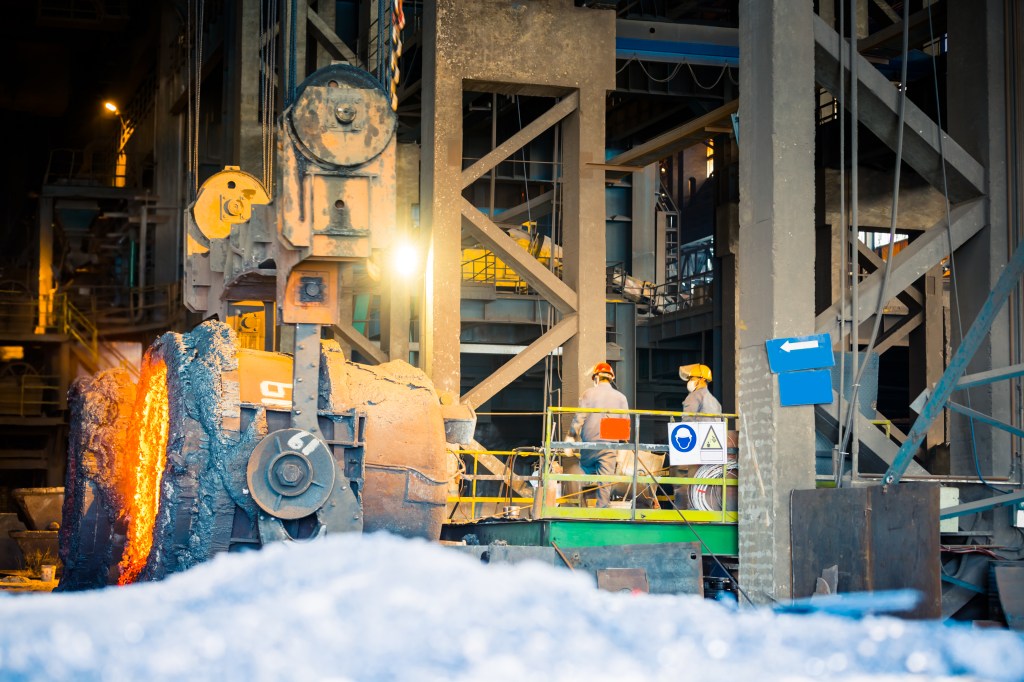
The northeastern region of China, encompassing Liaoning, Jilin, and Heilongjiang provinces, was historically celebrated for specializing in heavy industries. It played a pivotal role during China’s initial economic ascent. However, since the central government redirected its development priorities in the late 1970s, the region has fallen short in economic performance despite sustained revitalization efforts. ACI’s recent study delves into the temporal evolution of the region, aiming to gauge the lasting influence of government revitalization schemes and provide insights for nurturing enduring growth in Northeastern China.
In the 1950s, Northeastern China surged as a hub for heavy industries, commanding over one-fifth of the national industrial output, thanks to a rich resource base, favorable policies, and strategic collaboration with the Soviet Union. The trajectory of Northeastern China faced a downturn during the late 1970s when the government embraced market-oriented reforms and emphasized export-led growth. While the strategy spurred rapid development in the eastern coastal regions, Northeastern China struggled to adapt owing to its heavy reliance on heavy industries and state-owned enterprises (SOEs). Its contribution to the national GDP dwindled from 19.2% in 1960 to 9.8% in 2000. Recognizing the need for revitalization and economic parity with other regions, the government has initiated a series of revitalization plans since 2003 to address these challenges (see Figure 1).

To assess the lasting influence of the revitalization schemes, the authors adopt the methodology from a recent ACI working paper to score the competitiveness of five regions of Greater China from 2009 to 2019. As shown in Figure 2, Northeastern China held the third position in overall competitiveness in 2009, but experienced a significant decline in scores by 2014, remaining at the bottom in subsequent years. The competitiveness performances indicate that the top-down rejuvenation endeavors are yet to deliver substantial results.

To identify the factors that hindered Northeastern China’s revitalization, the authors conducted in-depth investigations across four domains and analyzed specific indicators.
The first domain is Macroeconomic Stability, in which the region ranked bottom over the years and saw a declining trend. This is due to the region’s heavy reliance on investment-driven growth, highlighting the need to promote domestic consumption and balanced economic development. Stagnancy in industry upgrading and challenges in fostering new economic engines also add to the difficulties faced by Northeastern China.
Despite scoring the lowest in the second domain (Government and Institutional Setting), the progress in SOE reforms improved the regions’ performance over time. With regard to the third domain on Financial, Business, and Manpower Conditions, Northeastern China shared similar scores with Central and Western China in 2009. However, the disparity between Northeastern China and the other two regions increased significantly after 2014, with Northeastern China ranking the lowest among all regions. This emphasizes the urgency for Northeastern China to resolve the longstanding problems of slower labor productivity growth, brain drain, and high unemployment. The region’s performance in the fourth domain (Quality of Life and Infrastructure Development) is also suboptimal. Moreover, the region’s heavy healthcare and social welfare expenditure, coupled with limited investment in high technology sectors, hampers its progress in advanced industries.
In essence, the economic challenges of Northeastern China are a microcosm of broader economic shifts and regional disparities in China. Hence, the above insights offer critical implications for policymakers and stakeholders pursuing sustainable regional growth. Given Northeastern China’s persistent challenges, including overdependence on a single growth driver, sluggish industrial restructuring, and brain drain, it is crucial to continually assess the effectiveness of the central government’s revitalization plan in tackling the region’s competitiveness hurdles.
Researchers: LI, Jingwei, ZHANG, Xuyao
 ACI Perspectives