Chart of the Week │ October 7, 2026
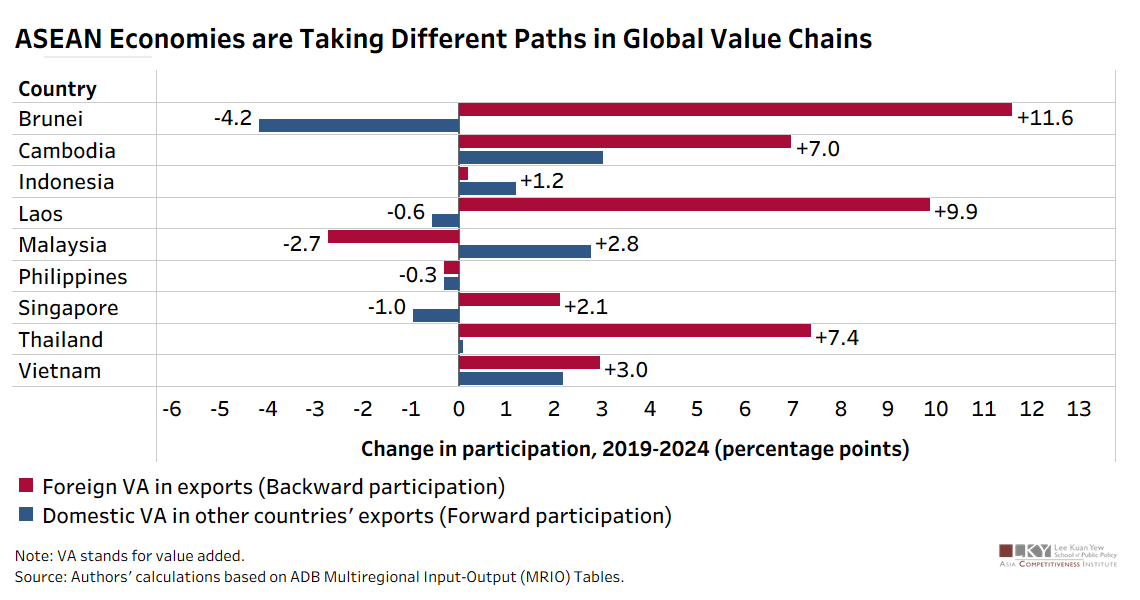
ASEAN economies are taking different paths in global value chains
ASEAN’s integration into global value chains (GVC) is a story of divergence rather than a shared regional trajectory.
Featured Research

Navigating Global Trade Volatility with the China SME Export Risk Index
Volatile global trade conditions, persistent protectionism, as well as surging energy and transport costs continue to present challenges to business operations. For export-oriented Small and Medium Enterprises (SMEs), which often operate with constrained resources, gathering timely market intelligence to navigate…
READ MORE
Graduating from LDC Status: how prepared is Nepal?
Nepal is set to soon graduate from Least Developed Country (LDC) status, but the milestone also serves as a stress test of Nepal’s economic resilience in the face of the gradual rollback of LDC-specific privileges. Nepal’s graduation was initially set…
READ MORE
When Free Lunch Isn’t Free: The Hidden Trade-offs of India’s School Feeding Scheme
India’s midday meal scheme — the world’s largest school feeding programme — provides free lunches to more than 115 million children every school day. The scheme was designed to fight malnutrition and encourage school attendance. New research from the Asia…
READ MORE
ASEAN Green Transition: Visible Progress, Incomplete Transformation
ASEAN is building a competitive clean-technology (cleantech) industry while securing substantial cleantech investment. The key question, however, is whether this momentum can steer ASEAN’s green transition and enhance the bloc’s sustainable competitiveness. ACI’s recent research offers a nuanced assessment: while…
READ MORE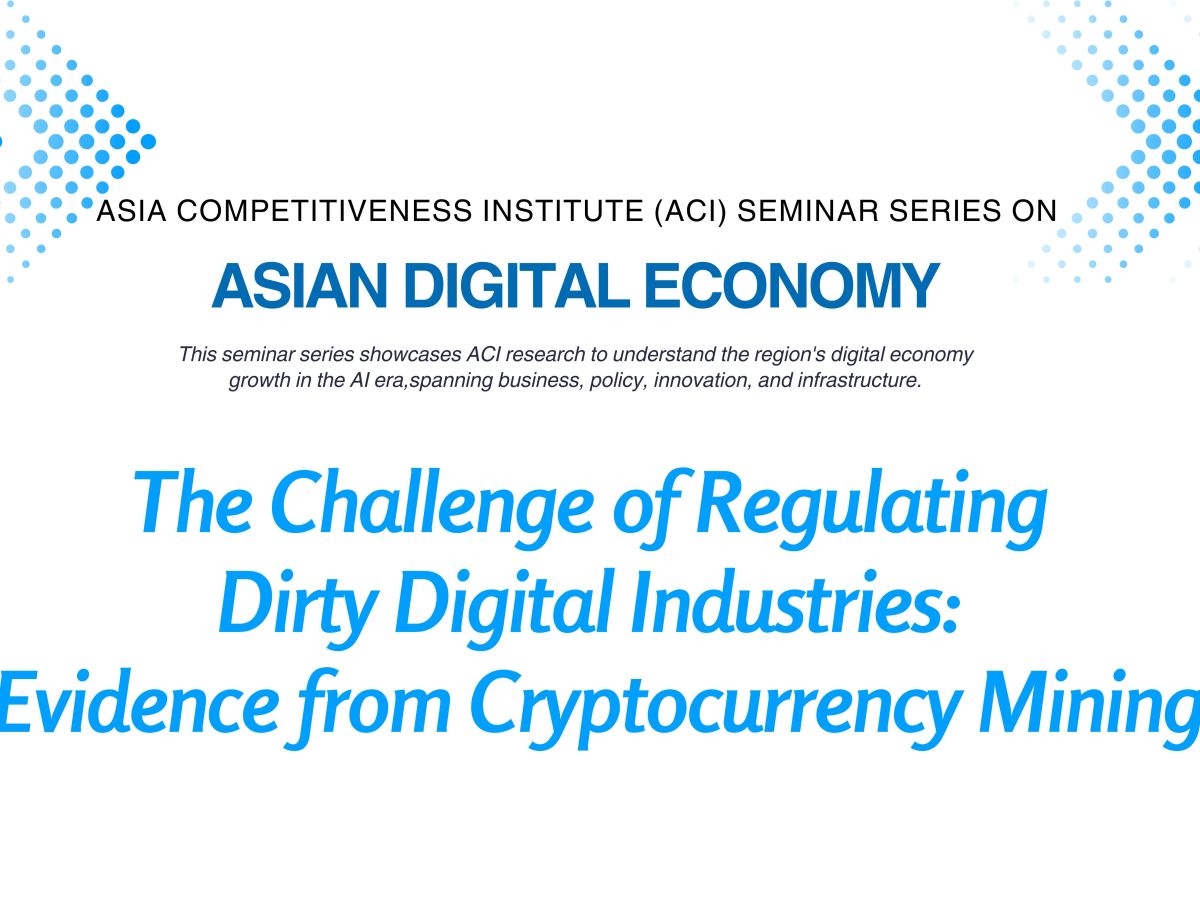
The Challenge of Regulating Dirty Digital Industries: Evidence from Cryptocurrency Mining
Computation-intensive digital industries are expanding rapidly, raising new challenges for energy and climate policy. ACI’s virtual seminar, “The Challenge of Regulating Dirty Digital Industries: Evidence from Cryptocurrency Mining,” held on 9 September 2026, examines the effectiveness of two policy options…
READ MORE
More power to founders: how dual-class shares reshape markets
What happens to companies already listed on a stock exchange when the exchange opens its doors to dual-class listings? ACI research finds that in Hong Kong, investors initially saw the reform as a competitive threat to existing technology firms. DCS reform…
READ MORE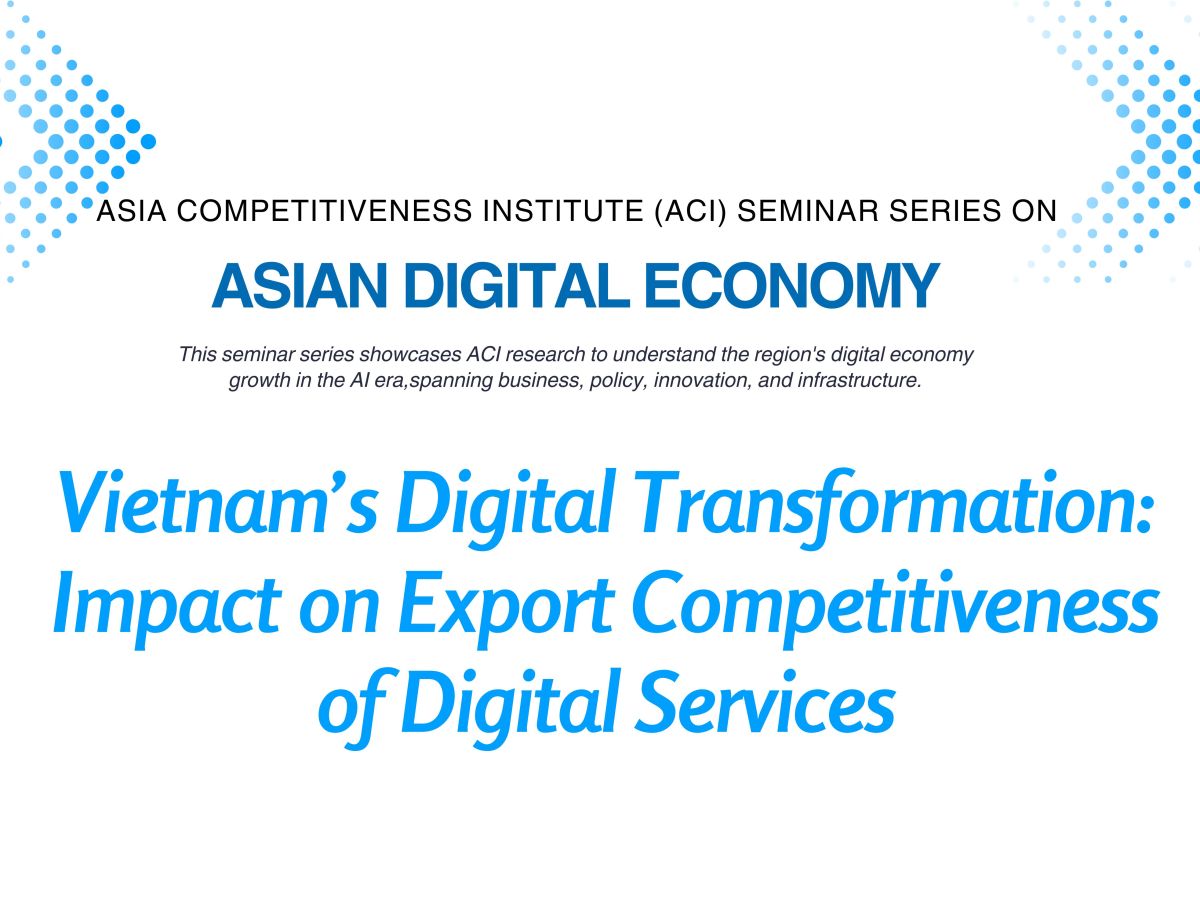
Vietnam’s Digital Transformation: Impact on Export Competitiveness of Digital Services
As Vietnam’s traditional manufacturing-led growth engine is approaching its limits, the government has made digital transformation a national development priority to enhance productivity and competitiveness. A key question is whether the national digital transformation agenda has created a strategic opportunity…
READ MORE
Can China’s Encouraged Industry Catalogue Revive Foreign Investment?
China’s inward foreign investment has fallen sharply since the pandemic. Can policy incentives reverse this decline, or are deeper structural forces at work? ACI’s latest research examines one of China’s main tools for attracting foreign direct investment (FDI): the Encouraged…
READ MORE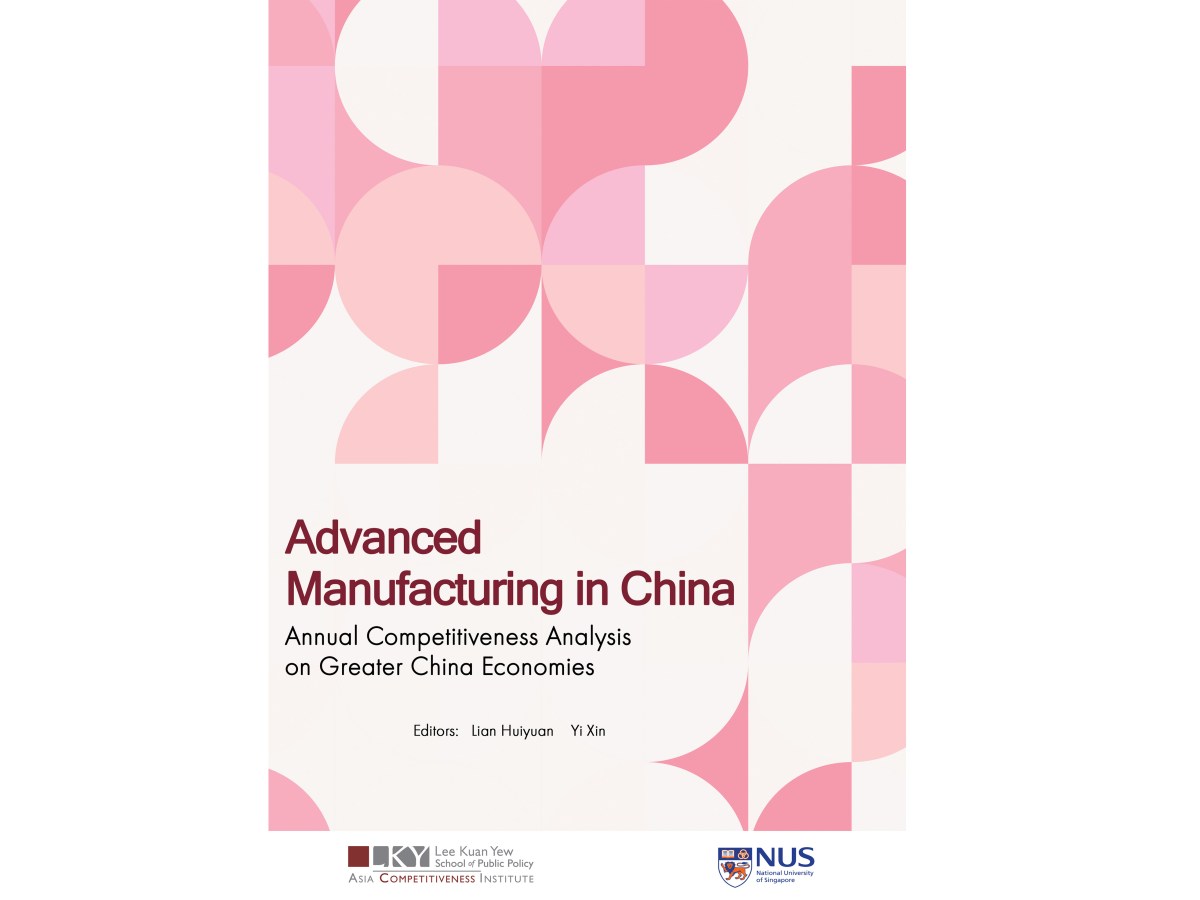
Book Launch | Advanced Manufacturing in China: Annual Competitiveness Analysis on Greater China Economies
In 2025, China’s economy grew by 5%, adding nearly one trillion USD to its GDP. The composition of growth, however, has shifted. Net exports increasingly underpinned overall growth, supported by strong export performance in ASEAN markets, while consumption remained the…
READ MORE
